
An alliterative exploration of everyone’s favorite berry
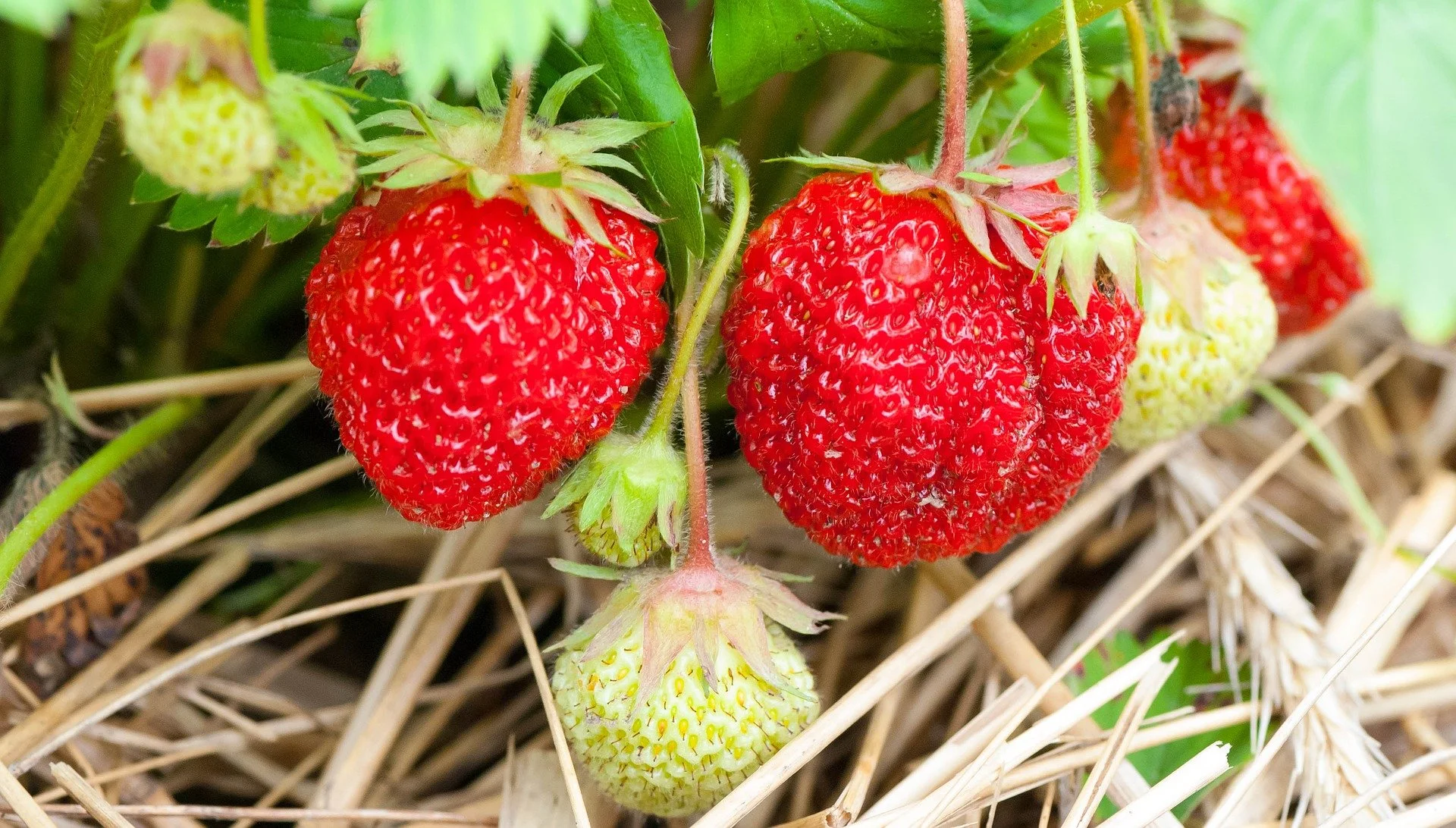
Strawberries are, without question, the most spectacularly spoiled crop we grow.
They are sensitive. Susceptible. Stubborn. Spoiled.
And still, everyone’s favorite.
Every spring, I start convincing myself that this will be the season everything settles down. The strawberries will sail smoothly into production. We’ll have stunning scarlet berries spilling from the field. CSA boxes will be stuffed. Customers will swoon.
And then some new strawberry-specific suffering arrives.
The Start of the Strawberry Story
Back in 2016, I started my first serious strawberry planting with about 1,000 plants from friends Fred and Lauri, free for the digging. After work in town each Friday for a month, I’d spend the evening digging up plants at their patch, and then transplant them at my farm by the suspicious glow of car headlights.
It felt slightly unhinged at the time, but also exciting. Simple. Scrappy.
In 2017, the plants produced their first real crop.
I was simply smitten.
The raccoons were also stoked.
The night before I planned to harvest, they staged what can only be described as a strawberry siege and snarfed down nearly every ripe strawberry in the patch.
That year, each CSA member received two strawberries in a Ziplock bag.
Technically, we did supply strawberries.
A Few Seasons of Success
The next few years, strawberries suddenly seemed simple.
The plants produced beautifully. We had enough berries for CSA boxes, market sales, and strawberry jam. I stupidly surmised that I had figured strawberries out.
In hindsight, this was probably beginner’s luck disguised as competence.
Because after that, the setbacks started stacking up.
Drought. Stifling summer stretches. Smothering weeds. Strawberry shrinkage during severe heat. Songbirds spearing ripe berries. Scrambling to spread row cover before spring freezes. Stressing over soaking storms sogging up the soft ripe fruit.
And then came the seriously scary problem: disease.
The Strawberry Supply Situation
Most people probably assume strawberry plants are simple to source.
They are not.
Commercial strawberry production in the U.S. relies heavily on a small number of suppliers producing at enormous scale. That means when disease problems appear, they can spread surprisingly far and surprisingly fast through the supply chain.
By 2024, our old strawberry patch was struggling, so I decided to tear it out and start over.
That was a substantial investment of time, sweat, and money.
I ordered 1,000 new plants for fall planting and coordinated a multi-day strawberry setup operation involving:
renting a tractor from Filley,
borrowing a mulch layer from Hallam,
schlepping equipment back and forth,
adjusting machinery to suit our needs,
shaping beds,
stretching irrigation,
securing mulch,
installing landscape fabric,
more loading, hauling, and unloading equipment,
and recruiting substantial assistance from Riley and Dad.
There is nothing quite like strawberries for turning a simple planting into a sprawling logistical production.
Somewhere in the middle of all this, I got a call from the supplier.
A new disease, “Neopestalotiopsis”, was affecting nearly all strawberry plants across the eastern half of the United States. And nobody knew much about this disease.
Did I still want the diseased plants I’d already paid for?
At that point, I had already torn out the old patch. There weren’t really backup options available that could produce for the following spring.
So I scrambled and gambled.
Besides, the disease was supposedly worse in soggy conditions, and we had been stuck in drought for years.
Surely that meant we stood a solid chance.
Surely.
The Soggy Season
The plants arrived looking… stressed.
But farming sometimes involves optimism bordering on delusion, so we planted them anyway.
Some survived the winter.
Then 2025 arrived cool, cloudy, soggy, and stubbornly rainy…essentially ideal conditions for fungal disease.
The strawberries suffered spectacularly. By winter, nearly the entire planting was dead.
That loss was discouraging not just emotionally, but financially. Strawberries are expensive to establish. The plants themselves cost money, but so does the infrastructure, irrigation, mulch, fabric, equipment, labor, and time.
They demand near-constant supervision while simultaneously attracting every creature in the county.
So Where Does That Leave Us?
Still stubborn.
This spring, we planted 600 new plants and are trying again.
A handful of older plants survived and are producing a few berries now and then, though probably not enough for full CSA distribution. You may spot a precious pint or two in the CSA swap box over the next few weeks.
And hopefully, assuming we can survive the diseases, droughts, downpours, deer, birds, rabbits, raccoons, and whatever surprising new strawberry-specific catastrophe appears next, the new planting will produce well next spring.
We’ll see.
That’s farming sometimes.
But perhaps this is also why local strawberries are so special.
When you eat a truly fresh strawberry from a small farm, you are tasting something remarkably seasonal and surprisingly difficult to produce. Behind every berry is an absurd amount of planning, expense, uncertainty, weather watching, troubleshooting, persistence, and occasionally outright suffering.
Still, every spring we try again.
Because when strawberries succeed, they are simply spectacular.
